Welcome to DVNO Wine.
You are about to view Lauren & Lawrence’s Wine Registry.
To continue, please click “Wine Registry”.
If you are NOT here for the Registry, please click “Home Page”
We hope you enjoy your visit.

AboutMiani
Miani’s Enzo Pontoni stands head and shoulders above most of his winemaking peers — both literally and figuratively. The nearly seven-foot tall Pontoni towers... in the vineyard, but he knows his vines on a first-name basis, and as a result, he crafts some of the most hard-to-get wines in Italy’s Colli Orientali del Friuli. Enzo thinks each individual vine possesses its own microclimate, and he tends to his individual plants with individualized care, something that includes possibly the most assertive green harvests in all of Italy. Where other winemakers would leave several bunches of grapes on a vine, Enzo leaves one, maybe two. Where other winemakers would garner a few thousand bottles of wine from a plot, Enzo will get a few hundred. Famously reclusive and shy, Enzo owns only nine acres of vineyards but rents another 22, and he produces fewer than 1,600 cases a year, and that’s 1,600 total cases, spread across his various bottlings. Enzo works with a number of different varieties, from Chardonnay to Ribolla Gialla to Tocai Friulano to Sauvignon Blanc, but he also makes some evocative reds, including his Merlots and Refoscos — all of which inspire collectors to snap them up upon release. No matter the Miani wine, they’re extraordinarily rare, explosive, cult-inspiring, and delicious.
Poderi Aldo Conterno
Poderi Aldo Conterno rose to fame by crafting some of the best-known, best-loved cru Barolo expressions in its Barolo Romirasco, Colonnello, and Cicala,... as well as its Chardonnay Bussiador and its Quartetto, a red wine that blends indigenous Freisa with international grapes. In 1969, Aldo Conterno famously parted ways with his brother at their father’s estate, Giacomo Conterno, and founded Poderi Aldo Conterno in the “Favot” cellar on 61 acres in Bussia of Monforte d'Alba, the heart of Barolo country. Aldo’s vision was to craft wines that blended traditional structure, grace, and longevity with exquisitely transparent terroir, seductive juiciness, and a clearly defined personality. Before his death in 2012, Aldo achieved all this and more, creating a winemaking legacy that set him apart as one of the world’s greatest winemakers. The Aldo Conterno estate continues Aldo’s remarkable winemaking work in the hands of his three sons, Franco, Stefano, and Giacomo.


About Poggio di Sotto
Founded in 1989 by Piero Palmucci, Poggio di Sotto lays claim to some of the best vines, the finest microclimates, and the greatest biodiversity to be... found in the densely populated Brunello di Montalcino region. Studies done in conjunction with the University of Florence have found about 120 different biotypes of Sangiovese Grosso growing on the estate’s 115 acres (50 under vine). But this stunning biodiversity — the source of the brightness, intense aromatics, and complexity in the estate’s wines — is just the start. Poggio di Sotto is also home to some of the region’s oldest vines, which average about 50 years of age. These factors combine with the steeply sloped, south-facing vineyards located in Castelnuovo dell'Abate, located in the southeast Brunello subzone in the shelter of nearby Mount Amiata, as well as the soil’s composition of gravel and clay in lower vineyards and sandy clay near the top of the hill. Together, the biodiversity, vine age, microclimate, and soil composition create an ideal environment for the crafting of exemplary, finessed, and powerful Brunello. Now owned by ColleMassari, Poggio di Sotto continues to craft its deeply balanced wines with very traditional methods.
About Bartolo Mascarello
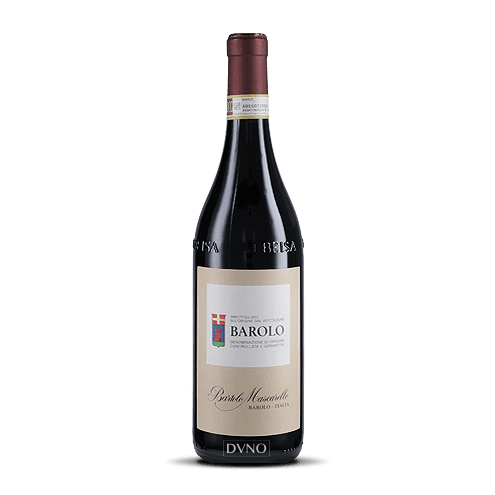
Bartolo Mascarello was an intractable defender of traditional Barolo, the “last of the Mohicans,” in his words. Bartolo made Barolos that... gorgeously embodied their vintage and their terroir, and these supple, powerful, and nuanced wines have captivated their fans for generations. Since Bartolo’s passing in 2005, his daughter Maria Teresa Mascarello has helmed the cantina at 15 Via Roma, the legendary site of the Bartolo Mascarello estate since its founding in 1918, and under her leadership, Mascarello’s Barolo, Dolcetto, and Barbera have grown even finer, subtler, more detailed, and spellbinding. While the Mascarello estate sports enviable holdings in Cannubi, San Lorenzo and Rué, located in the commune of Barolo, as well as in La Morra’s Rocche in the commune of La Morra, it still has never released a cru wine. Blending, Bartolo believed, provided balance, especially in challenging vintages. Maria Teresa sees no reason to change her father’s ways (or those of his father, and his before him). After all, there’s no improving upon perfection.



About Bartolo Mascarello
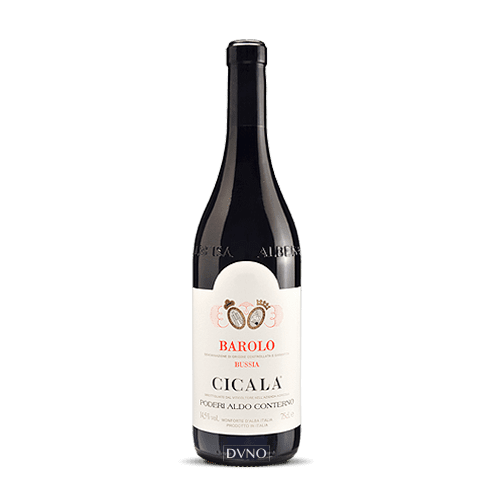
Bartolo Mascarello was an intractable defender of traditional Barolo, the “last of the Mohicans,” in his words. Bartolo made Barolos that... gorgeously embodied their vintage and their terroir, and these supple, powerful, and nuanced wines have captivated their fans for generations. Since Bartolo’s passing in 2005, his daughter Maria Teresa Mascarello has helmed the cantina at 15 Via Roma, the legendary site of the Bartolo Mascarello estate since its founding in 1918, and under her leadership, Mascarello’s Barolo, Dolcetto, and Barbera have grown even finer, subtler, more detailed, and spellbinding. While the Mascarello estate sports enviable holdings in Cannubi, San Lorenzo and Rué, located in the commune of Barolo, as well as in La Morra’s Rocche in the commune of La Morra, it still has never released a cru wine. Blending, Bartolo believed, provided balance, especially in challenging vintages. Maria Teresa sees no reason to change her father’s ways (or those of his father, and his before him). After all, there’s no improving upon perfection.

About Biondi-Santi
Without the Biondi-Santi family’s Il Greppo estate, Brunello wouldn’t exist. Clemente Santi made the first wine called Brunello in 1869, and his son... Ferruccio further isolated the BBS1 clone of the Sangiovese grape, which the family had named “Brunello,” or the little brown one. Ferruccio, who founded the Il Greppo estate in 1880, dedicated his life’s work to crafting a long-aging monovarietal wine with this grape. Tancredi Biondi-Santi, Ferruccio’s son, brought Brunello to the world and instilled practices like “topping off” aging bottles of Brunello Riserva. Franco Biondi-Santi, who passed away in 2013, maintained the estate’s traditions and created a legacy in the process. Today’s Il Greppo is helmed by Jacopo and Alessandra Biondi-Santi, Franco’s children, though French corporation EPI holds a majority stake in the estate. Under this new control, Biondi-Santi’s vineyards are being replanted and upgrades are being made to the cantina; however, the 67-acre Il Greppo estate continues its practice of crafting fine, age-worthy Brunello and captivating Rosso di Montalcino wines. Indeed, the estate extended the aging time of its Brunello from five to six years, and it’s started special paired releases of a recent Brunello Riserva with a mature bottling, both commitments to the belief that while time may pass, but a Biondi-Santi Brunello is eternal. About Bartolo Mascarello
Bartolo Mascarello was an intractable defender of traditional Barolo, the “last of the Mohicans,” in his words. Bartolo made Barolos that... gorgeously embodied their vintage and their terroir, and these supple, powerful, and nuanced wines have captivated their fans for generations. Since Bartolo’s passing in 2005, his daughter Maria Teresa Mascarello has helmed the cantina at 15 Via Roma, the legendary site of the Bartolo Mascarello estate since its founding in 1918, and under her leadership, Mascarello’s Barolo, Dolcetto, and Barbera have grown even finer, subtler, more detailed, and spellbinding. While the Mascarello estate sports enviable holdings in Cannubi, San Lorenzo and Rué, located in the commune of Barolo, as well as in La Morra’s Rocche in the commune of La Morra, it still has never released a cru wine. Blending, Bartolo believed, provided balance, especially in challenging vintages. Maria Teresa sees no reason to change her father’s ways (or those of his father, and his before him). After all, there’s no improving upon perfection.No account yet?
Create an Account