Welcome to DVNO Wine.
You are about to view Lauren & Lawrence’s Wine Registry.
To continue, please click “Wine Registry”.
If you are NOT here for the Registry, please click “Home Page”
We hope you enjoy your visit.

Tenuta Marino Audacia IGT Marche Rosso 2018
Tenuta Marino’s flagship wine, Audacia makes the most of its low production, high quality 2018 vintage... with a wine that’s intense, detailed, and frankly gorgeous. This kaleidoscopic wine wraps its succulent wild berries with sun-warmed herbs, peppery spices, and kisses of cocoa and salty caramel in a complex, muscular, and balanced profile. Mostly Montepulciano with Cabernet Sauvignon and some Sangiovese Grosso, Audacia is a bold, structured red that welcomes your discovery — and it’s sure to appreciate in value down the road!About Castello Bonomi
The Paladin family, who has been making estate-bottled wine for about 60 years, owns several estates across Italy, from the Veneto to Tuscany, but... perhaps their most famous and most distinct is Castello Bonomi, in Lombardy’s Franciacorta region. With vinicultural history that dates back to medieval Benedictine monks, Franciacorta spans about 5,400 acres, but this rare northern Italian region is devoted to one unique style of wine: the best champagne-styled sparklers that you can find outside of France — indeed, it’s the sole DOCG region that permits classic méthode champenoise sparklers. The family-owned-and-operated Castello Bonomi estate is housed in a gorgeous art deco villa built in the late nineteenth century, and the estate’s vineyards sit on 60 steeply pitched acres in a natural amphitheater that rests at the foot of Mount Orfano. These terraced vineyards enjoy a privileged microclimate that includes limestone-rich soils, southern exposures, excellent drainage, and pure sunlight. These elements provide the raw materials that Castello Bonomi’s Chardonnay and Pinot Nero grapes need, while a strict green harvest, low yields, and stringent grape sorting help the estate’s team craft a range of terroir-driven, award-winning Franciacorta wines.Zalto Origins
Zalto glassware hails from a tiny village in Austria close to the Czech border, and for generations were blown by artisans whose ancestral lines go back to the... famous glass blowers of Venice. The original design came from the mind of Father Hans Denk over 20 years ago, and it was the first to combine unique angles with hand-blown craftsmanship, ultimately revolutionizing what a wine glass could be. Known as the Austrian "wine priest" (he was in fact a priest), Father Denk was inspired by the tilt of the Earth, and how using the Earth's angles in his design influenced the presentation of the wine. Famous for his incredible palate, Father Denk was relentless as he stretched the limits of form meeting function to create glass perfection. In the decades since, that pursuit has never ceased, with each style being fine tuned further, and where warranted, additional styles being added to the line, still inspired by his original groundbreaking design.Zalto Difference
That the glass is lighter, thinner and more elegant in appearance is more than just an aesthetic ideal. The lip of the glass is so thin that the wine is delivered more directly to the palate, so the glass itself doesn't stand in the way of the taste of the wine. If you can imagine trying to sip a fine wine from a hefty beer mug, you can understand why this makes all the difference. The entire Zalto line is dishwasher safe and is, in fact, dishwasher safer. Hand washing the glasses can actually be riskier, as pressure from within the glass or the creation of torque has a greater chance of causing breakage. The glasses are resistant to clouding and scratching and in tests have remained crystal clear for over a hundred passes through the dishwasher. Finally, all Zalto glasses are free of toxic lead. You can feel free to use your Zalto glassware as your "everyday" glass as well as the glass for your most special occasions.Zalto Origins
Zalto glassware hails from a tiny village in Austria close to the Czech border, and for generations were blown by artisans whose ancestral lines go back to the... famous glass blowers of Venice. The original design came from the mind of Father Hans Denk over 20 years ago, and it was the first to combine unique angles with hand-blown craftsmanship, ultimately revolutionizing what a wine glass could be. Known as the Austrian "wine priest" (he was in fact a priest), Father Denk was inspired by the tilt of the Earth, and how using the Earth's angles in his design influenced the presentation of the wine. Famous for his incredible palate, Father Denk was relentless as he stretched the limits of form meeting function to create glass perfection. In the decades since, that pursuit has never ceased, with each style being fine tuned further, and where warranted, additional styles being added to the line, still inspired by his original groundbreaking design.Zalto Difference
That the glass is lighter, thinner and more elegant in appearance is more than just an aesthetic ideal. The lip of the glass is so thin that the wine is delivered more directly to the palate, so the glass itself doesn't stand in the way of the taste of the wine. If you can imagine trying to sip a fine wine from a hefty beer mug, you can understand why this makes all the difference. The entire Zalto line is dishwasher safe and is, in fact, dishwasher safer. Hand washing the glasses can actually be riskier, as pressure from within the glass or the creation of torque has a greater chance of causing breakage. The glasses are resistant to clouding and scratching and in tests have remained crystal clear for over a hundred passes through the dishwasher. Finally, all Zalto glasses are free of toxic lead. You can feel free to use your Zalto glassware as your "everyday" glass as well as the glass for your most special occasions.

About Il Poggione Brunello
Founded near the end of the nineteenth century, Il Poggione’s modern age began in 1958, when Leopoldo Franceschi, grandfather of the current... owner, engaged renowned winemaker Pierluigi Talenti as the estate’s winemaker. Pierluigi made the most of Il Poggione’s considerable natural gifts for 40 years, shaping the estate’s muscular, graceful, and aromatic house style as he trained Fabrizio Bindocci, who assumed control of the estate in 1999, and he now runs the estate with his son, Alessandro. Nestled in the southern Brunello subzone in the hills around Sant’Angelo in Colle, Il Poggione’s 1,482 acres (302 planted to vine) possess some astonishing terroir. Today’s Il Poggione grows its grapes with non-interventionist methods, and it crafts its wines in its state-of-the-art cantina using traditional methods, including aging its wines in large oak vats in its underground cellar. One of the great authentic Brunello makers, Il Poggione’s wines consistently over-perform both in the cellar and on the table.
About Bartolo Mascarello
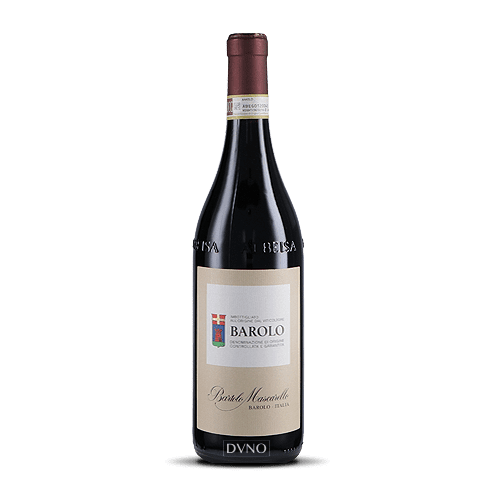
Bartolo Mascarello was an intractable defender of traditional Barolo, the “last of the Mohicans,” in his words. Bartolo made Barolos that... gorgeously embodied their vintage and their terroir, and these supple, powerful, and nuanced wines have captivated their fans for generations. Since Bartolo’s passing in 2005, his daughter Maria Teresa Mascarello has helmed the cantina at 15 Via Roma, the legendary site of the Bartolo Mascarello estate since its founding in 1918, and under her leadership, Mascarello’s Barolo, Dolcetto, and Barbera have grown even finer, subtler, more detailed, and spellbinding. While the Mascarello estate sports enviable holdings in Cannubi, San Lorenzo and Rué, located in the commune of Barolo, as well as in La Morra’s Rocche in the commune of La Morra, it still has never released a cru wine. Blending, Bartolo believed, provided balance, especially in challenging vintages. Maria Teresa sees no reason to change her father’s ways (or those of his father, and his before him). After all, there’s no improving upon perfection.No account yet?
Create an Account