Welcome to DVNO Wine.
You are about to view Lauren & Lawrence’s Wine Registry.
To continue, please click “Wine Registry”.
If you are NOT here for the Registry, please click “Home Page”
We hope you enjoy your visit.


About Ornellaia
Though Ornellaia entered the Super-Tuscan field later than Sassicaia and Solaia, Ornellaia made up for lost time with global impact, and today, Ornellaia’s... flagship and other wines are hot commodities on the fine wine market. Ornellaia’s 244 acres sit in Bolgheri, just a few miles from the Tyrrhenian Sea, and the estate’s holdings are split between two parcels, a 100-acre parcel located in a natural bowl near the state-of-the-art cantina and the remaining acres in the Bellaria subzone closer to the sea. This assortment of microclimates, supported by soils that range from stony to clayey to loamy, offers ideal growing conditions to its predominantly Bordeaux-style grape varietals. Since 2005, the Frescobaldi family has owned and operated Ornellaia, and Axel Heinz has served as the company’s chief winemaker, running the Ornellaia operation with a painstaking eye for detail and dedication to his craft.
About the Tenuta di Carleone
While Tenuta di Carleone di Castiglioni seems like a new estate — it was established only in 2012 — this winery in Radda, Chianti, has a long... history behind it. The monks of Badia al Coltibuono founded the first winemaking venture on these lands in 1078, and the Carleone’s 494 acres (74 under vine) had been home to various winemaking enterprises for centuries. The modern age of Carleone was born when Austrian businessman Karl Egger and his sister, Kristine, partnered with winemaker Sean O’Callaghan with a shared vision of creating ultra-elegant, terroir-driven, wholly natural wines. Today’s Carleone estate has spread beyond Radda with plots in Gaiole and Vagliagli as well. Sean, the “one-eyed bandit” who inspired the estate’s cult wine Il Guerico, employs a range of artisanal techniques in his winemaking that can include foot-stomping; using whole clusters; open-top fermentation in cement or wood; and aging in steel, vats, or amphorae — whatever he thinks will give the estate’s natural, unfiltered wines the greatest “bevibilità,” or drinkability.
About Le Cinciole
Located in Panzano, near the Conca d’Oro, Le Cinciole spreads across about 74 acres of beautiful, gently rolling wine country. Valeria Viganò and Luca... Orsini founded Le Cinciole in 1991 with the aim of crafting ultra-natural wines that express their terroir and honor the traditions of Chianti Classico. Working alongside their children, Valeria and Luca have built a winery that is “beyond organic,” dedicating themselves to biodynamic agriculture, sustainable viticulture, and increased biodiversity. Le Cinciole’s 24 acres of vineyards sport wonderful galestro soils that mix slate, clay, and sandstone, resting at between 1,400 and 1,640 feet above sea level, planted mostly to indigenous grapes, along with a few international varietals. There’s no doubt that Le Cinciole is a winery to watch — and even better, to enjoy!

About Le Macchiole
Founded in 1983 on a nine-acre plot, Le Macchiole is Bolgheri’s best-known boutique producer. Hometown hero Eugenio Campolmi and wife Cinzia Merli... launched Le Macchiole with a big dream and almost no money, starting their estate by planting a handful of grape varietals with scattershot abandon, experimenting to see which grapes flourished in the estate’s mineral-rich soils, and crafting mono-varietal expressions from their vines. Sadly, Eugenio passed away unexpectedly in 2002, but Cinzia continued in his footsteps. Cinzia hired her brother, Massimo Merli, as estate manager, methodically added acreage, carefully fine-tuned the viticultural protocol, and steadily raised the bar with every vintage. Today, Le Macchiole’s 54 acres are farmed biodynamically, and the estate produces a range of six wines: three mono-varietal reds, as well as two blends, one white and one red. Cinzia still helms the estate, now aided by her sons, Elia and Mattia, who are ensuring the future of Le Macchiole’s terroir-driven, elegant, and showstopping wines.

ABout Canalicchio di Sopra
Canalicchio di Sopra’s history is also the history of Montalcino. Once a sharecropper, Primo Pacenti founded the estate in 1962 on land that his... family had worked for generations. Primo was proud to be one of the original twelve members of the Brunello Consortium; when he retired, Primo handed Canalicchio di Sopra to his son-in-law, Pier Luigi Ripaccioli, and since 2001, the estate has been run by Pier Luigi’s three children, Francesco, Marco, and Simonetta. With two vineyard parcels that sit north and east of the town of Montalcino, sheltered by Mount Amiata and kissed by sea breezes blowing off the Mediterranean, Canalicchio di Sopra’s 47 acres occupy some of the highest altitudes in the Brunello region and possess a superb range of microclimates. “Elegance” is the watchword at Canalicchio di Sopra, and this maker delivers, vintage after delicious vintage.
About Altesino
Housed in a fifteenth-century palazzo in Montosoli, the most northern region of the Brunello region, Altesino is something of a contradiction. On the one hand,... this family-owned-and-operated estate is devoted to modernist winemaking. The Altesino team, helmed by Simone Giunti and Alessandro Ciacci, ages its finessed, layered Brunello wines in barrique — and this modernist turn began more than four decades ago. On the other hand, Altesino’s owner, Elisabetta Gnudi Angelini, who bought the estate in 2002, puts an old-school emphasis on the estate’s vines, and it sustainably tends its 247 acres (about half under vine) in order to ensure the high quality of its grapes. While Montosoli remains Altesino’s home, over the years the estate has added new parcels to its portfolio, and it now boasts six separate vineyards that range from Castelnuovo dell’Abate and Sant’Angelo in Colle in the South to Montosoli in the North. This range of terroirs not only lends richness and texture to Altesino’s wines but also allows this marque producer to grow grapes like Cabernet Sauvignon, Merlot, and select white grapes. Always nuanced, sophisticated, and polished, Altesino’s wines are prized by Brunello fans around the world.
About Tenuta San Guido
Sassicaia is arguably Italy’s most famous bottle of wine, and its maker, Tenuta San Guido, is Italian wine aristocracy. Sassicaia and its Super-Tuscan... revolution changed the face of Italian wine — and it catapulted Tenuta San Guido into the highest echelon of wine producers. Today, Marchese Nicolò Incisa della Rocchetta continues in his father’s footsteps even as he prepares to hand over San Guido estate to his son, Sebastian Rosa. Over the years, Tenuta San Guido expanded its vineyards to encompass 190 acres, planted to Cabernet Sauvignon and Cabernet Franc, and the estate expanded its lineup to include “second” wine Guidalberto and entry-level Le Difese. Debuting with the 2000 vintage, Guidalberto holds fast to its ideal of accessibility upon release, but over the years, it has grown more refined, polished, and elegant. Le Difese, debuting with the 2003 vintage, does the work of the estate’s “everyday” wine, but when Tenuta San Guido makes it, the “everyday” wine is still a reason to celebrate. Tenuta San Guido’s outstanding Guidalberto and Le Difese bottlings add even more luster to Italy’s premier Super-Tuscan estate.
About Tenuta Bibbiano
The name “Bibbiano” first appears in historical documents that are more than 1,000 years old, and these lands have been growing grapes for almost... that long; a respect for this legacy imbues everything that Tenuta di Bibbiano does, from its superb Chianti Classico bottlings to its excellent olive oil. In 1865, the Marzi family purchased the Bibbiano lands, and for five generations, they’ve been the careful, conscientious stewards of the property. Bibbiano boasts gorgeous vineyards that span about 60 acres in the Chianti Classico zone. Surrounded by a large grove of olive trees, Bibbiano’s limestone-rich, clayey vineyards are home to primarily Sangiovese Grosso and Sangiovese vines, along with other select indigenous Tuscan grape varietals, and the estate has been certified organic for more than a decade. Bibbiano strives to create wines that reflect their Tuscan traditions and terroir, and they pack tremendous value at their price point!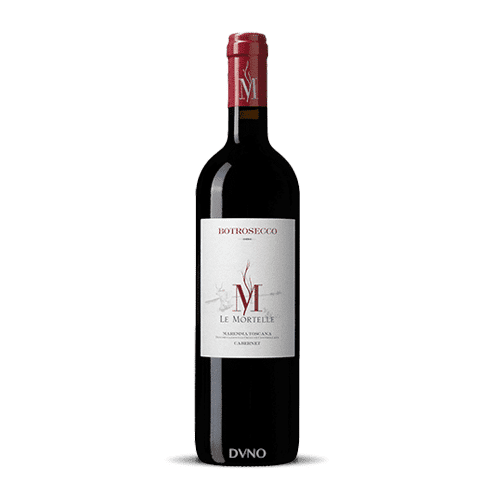
About Marchesi Antinori Le Mortelle
Located on the Maremma Coast near the family's Guado al Tasso estate in Bolgheri, Le Mortelle was once part of a larger estate called La... Badiola, created in the nineteenth century when the Duchy drained the marshy areas around Grosseto. The Antinori family purchased Le Mortelle in 1999, and the estate’s name, which comes from the region’s plentiful wild myrrh, signals the family’s green commitment. Le Mortelle isn’t merely certified organic — it also sports a state-of-the-art cellar facility constructed with natural materials and erected under the earth. Built into the side of a hill, Le Mortelle’s cantina is barely visible, but its three-story structure allows for gravity to move the wine from pressing to fermentation to aging barrels, which reduces energy and treats the wine with tender loving care. Le Mortelle occupies almost 670 acres, with 420 acres under vine, and it boasts a variety of soils that range from sandy and loamy with clay and silica to rocky, pebbly, and mineral-rich. While Le Mortelle’s range of wines is small, the impact is great, and it’s only a matter of time before this Antinori estate achieves the renown it deserves. About Marchesi Antinori Le Mortelle
Located on the Maremma Coast near the family's Guado al Tasso estate in Bolgheri, Le Mortelle was once part of a larger estate called La... Badiola, created in the nineteenth century when the Duchy drained the marshy areas around Grosseto. The Antinori family purchased Le Mortelle in 1999, and the estate’s name, which comes from the region’s plentiful wild myrrh, signals the family’s green commitment. Le Mortelle isn’t merely certified organic — it also sports a state-of-the-art cellar facility constructed with natural materials and erected under the earth. Built into the side of a hill, Le Mortelle’s cantina is barely visible, but its three-story structure allows for gravity to move the wine from pressing to fermentation to aging barrels, which reduces energy and treats the wine with tender loving care. Le Mortelle occupies almost 670 acres, with 420 acres under vine, and it boasts a variety of soils that range from sandy and loamy with clay and silica to rocky, pebbly, and mineral-rich. While Le Mortelle’s range of wines is small, the impact is great, and it’s only a matter of time before this Antinori estate achieves the renown it deserves.San Vito Tosacana IGT 2019
While Matthew Fioretti, Cerbaiona’s winemaker-owner, crafted this Merlot to gratify his own palate, he has... realized that it’s too good to keep to himself. The extremely low production 2019 San Vito Toscana derives from Merlot grapes purchased from trusted growers, and after whole berry fermentation, it ages in a combination of new barrique and amphorae; the resulting wine is a cult item waiting to happen.

No account yet?
Create an Account

